

Mobile devices are not supported temporarilyPlease go to the PC terminal to use it


 EN
EN IP Deep
 2026-01-13 14:30
 Static Residential
Proxy technology acts like a bridge between users and the internet, helping you browse more securely and smoothly. This article will take you deep into understanding static residential proxies — a type of proxy service based on real home broadband IPs that are long-term, fixed, and highly trustworthy, helping you build a better online operation experience.
First, what are proxies?
Also known as a network proxy, it is a network service mechanism that enables an end device (typically a client) to communicate indirectly with a target device (usually a server) via an intermediate node.
The computer system or network device that provides proxy services is called a proxy server. The client's network request is first sent to the proxy server, which then forwards it to the target server, thereby achieving identity substitution and traffic relay.
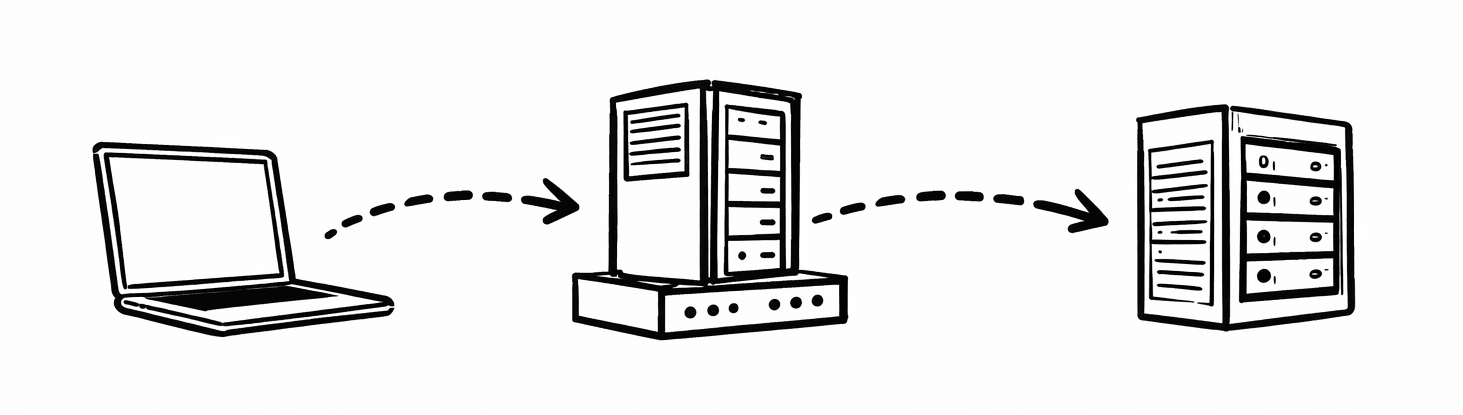
Typical proxy providers offer various proxy types such as residential proxies (ISP proxies), data center proxies, and mobile proxies. The terms “residential,” “data center,” and “mobile” mainly refer to the source of the IP address used during external communication — that is, whether the IP belongs to a home broadband network, a data center network, or a mobile carrier network.
Static residential proxies specifically refer to proxy services that use real home broadband (ISP) IP addresses and keep them fixed for the long term.
1. Stable IP Addresses
Provide fixed IPs that avoid connection interruptions and risks caused by frequent changes.
2. High Authenticity
IPs come from real home broadband networks, offering high credibility and reducing the chance of being detected as proxies.
3. Low Risk of Bans
Usually dedicated or lightly shared IPs, minimizing the risk of bans caused by multiple users sharing the same IP.
4. Continuous and Stable Connections
Ensure continuous and stable network connections, improving access speed and response efficiency.
5. Reduced Risk Control Interference
Fixed IPs help lower the chances of security verifications and risk control triggers caused by frequent IP changes.
✅ Cross-border E-commerce Account Management
Amazon, eBay, Shopee, TikTok Shop
What you fear most isn’t slow speed, but account linkage.
A stable residential IP acts as the fundamental “environment anchor.”
Facebook, Instagram, X, TikTok
Accounts aren’t just registered—they’re “cultivated.”
Stable IPs allow accounts room to grow.
✅ Advertising Account Management and Ad Verification
Advertising systems are essentially trust-based games.
Stable IP = Stable history = Less review and throttling.
❌ High-frequency, large-scale IP rotation tasks
Tasks such as large-scale data scraping and web crawling require frequent IP changes. Static residential proxies are limited in quantity and more costly, making them unsuitable.
❌ Short-term or temporary operations
For one-time visits or scenarios with many concurrent short-term requests, rotating proxies or data center proxies are more flexible and cost-effective.
❌ Scenarios demanding extremely high speed
Since static residential proxies rely on real broadband, their speed and bandwidth might not match data center proxies, so they’re not suitable for tasks requiring ultra-low latency or very high bandwidth.
1. Choose the Right Proxy Provider
Static residential proxies rely on real home broadband IPs. IPDeep is a reputable, stable professional proxy platform with a vast residential IP pool and strict management.
2. Register and Activate Your Account
Register on the proxy provider’s official website and log in.
3. Choose a Plan or Package Based on Your Needs
Providers usually offer various plans based on IP quantity, bandwidth, geographic location, etc. Choose the one that fits your business scale and target region.
4. Obtain Proxy Server Configuration Details
The provider will supply proxy server addresses, port numbers, and authentication methods (username and password). Sometimes, a management dashboard is also available for IP management and monitoring.
5. Configure the Proxy on Your Device or System
According to your use case, set the proxy information on your target device, browser, application, or server to route traffic through the static residential proxy.
Static residential proxies may sound technical, but essentially, they help you browse with a real, stable network identity, avoiding being flagged as abnormal visitors. Whether you’re into cross-border e-commerce, social media management, or advertising, choosing the right static residential proxy can make your accounts safer and your operations smoother.